Process safety is a cornerstone of industrial resilience, sustainability


Companies that treat process safety as a compliance exercise are missing the point entirely. It is not about meeting standards, but whether an operation can survive the next decade.
Chemical and Allied Industries’ Association (CAIA) executive director Deidré Penfold says process safety should be embedded into every layer of an operation. Failure to do this could result in catastrophic incidents – such as explosions, toxic releases into the environment and fires that can devastate lives, reputations and balance sheets – affecting lives, families and business continuity.
“The South African chemical sector and related industries operate in high-risk manufacturing environments. As a backbone of modern society, a driver of economic competitiveness and a vital link in numerous value chains, the sector simply cannot afford to overlook process safety.”
The sector supplies the essential building blocks for almost every value chain – from clean water, fuels, pharmaceuticals and fertilisers to construction materials, packaging, electronics and renewable-energy technologies.
Without chemicals, industries cannot produce, farms cannot grow and cities cannot operate at scale, emphasises Penfold.
What is Process Safety?
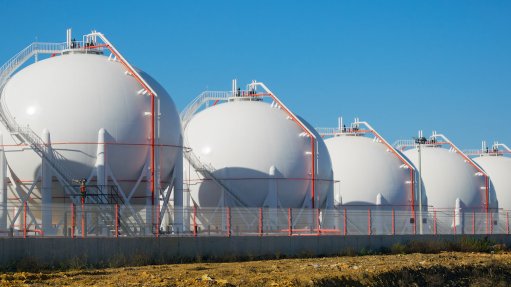
Process safety is the discipline focused on preventing catastrophic incidents in facilities that handle hazardous chemicals or energies. Unlike occupational safety, which protects workers from injury, illness or loss of life, process safety safeguards entire operations and surrounding communities from fires, explosions, toxic releases and major losses of containment. However, the two are very much intertwined, states Penfold.
Sustainability and Stewardship
For the past 30 years, CAIA has subscribed to Responsible Care, an international chemical sector initiative that fosters the responsible management of chemicals by everyone involved in their handling and use throughout the product chain.
“Safety and sustainability are two sides of the same coin. Preventing major accidents reduces environmental harm and supports clean growth objectives. Process safety events increasingly integrate sessions on circular economy principles, energy efficiency and climate resilience – helping companies future-proof their operations,” Penfold explains.
Moreover, circular economy principles (reuse, repair and remanufacture) require safe handling and transportation of hazardous materials throughout extended product lifecycles.
Through the Lens of Risk
The Risk-Based Process Safety (RBPS) framework – widely adopted by organisations such as IChemE and the Centre for Chemical Process Safety – offers a structured, modern approach to managing these risks. Several industries, especially mining and manufacturing, are beginning to recognise that safe production is not achieved by procedures alone, but through strong leadership, rigorous engineering and a culture that consistently prioritises hazard awareness and risk reduction.
RBPS rests on four interconnected pillars.
These include commitment to process safety, which guarantees that leadership, governance and workplace culture drive safe decision-making, empowering employees to ensure that risks are identified and managed, and hazards are addressed as quickly as possible.
The next pillar covers the understanding of hazards and risks, which involves tools such as Hazard Identification, Hazard and Operability, and quantitative risk assessments to uncover what could go wrong and how severe the consequences might be.
Next, managing risk applies multiple layers of protection – from inherently safer design, engineering and reliable controls to emergency preparedness — to prevent, contain or mitigate incidents.
Finally, learning from experience embeds continuous improvement by investigating incidents, sharing lessons and strengthening organisational memory.
Together, these pillars create a proactive, resilient system that keeps people, assets, and the environment safe in complex industrial operations, says Penfold.
Human Factors and Competence
“Systems, engineering and personal protective equipment cannot alone guarantee safety. Organisations must invest in behavioural programmes, competency and training, and robust permit-to-work systems.
“As automation grows, cognitive demands on operators increase, making human factors, engineering and non-technical skills (communication, decision-making and situational awareness) more critical than ever,” elaborates Penfold.
Capacity building is an investment in risk reduction, regulatory compliance, operational excellence and corporate reputation. In a world where one incident can erase decades of progress, knowledge is the ultimate safeguard, she concludes.
The CAIA will host a Process Safety Conference from March 4 to 5 at the Business Leadership South Africa Auditorium in Sandton.
Article Enquiry
Email Article
Save Article
Feedback
To advertise email advertising@creamermedia.co.za or click here
Research Reports

Projects
Latest Multimedia


Showroom

Sika South Africa is a trusted partner for the nation’s infrastructure, commercial, residential, and industrial sectors.
VISIT SHOWROOM
For over 15 years, Lilak Aluminium, a trusted leader in architectural extrusion supply, has delivered excellence to businesses like yours.
VISIT SHOWROOM


Press Office
Announcements
What's On
Subscribe to improve your user experience...
Option 1 (equivalent of R125 a month):
Receive a weekly copy of Creamer Media's Engineering News & Mining Weekly magazine
(print copy for those in South Africa and e-magazine for those outside of South Africa)
Receive daily email newsletters
Access to full search results
Access archive of magazine back copies
Access to Projects in Progress
Access to ONE Research Report of your choice in PDF format
Option 2 (equivalent of R375 a month):
All benefits from Option 1
PLUS
Access to Creamer Media's Research Channel Africa for ALL Research Reports, in PDF format, on various industrial and mining sectors
including Electricity; Water; Energy Transition; Hydrogen; Roads, Rail and Ports; Coal; Gold; Platinum; Battery Metals; etc.
Already a subscriber?
Forgotten your password?
Receive weekly copy of Creamer Media's Engineering News & Mining Weekly magazine (print copy for those in South Africa and e-magazine for those outside of South Africa)
➕
Recieve daily email newsletters
➕
Access to full search results
➕
Access archive of magazine back copies
➕
Access to Projects in Progress
➕
Access to ONE Research Report of your choice in PDF format
RESEARCH CHANNEL AFRICA
R4500 (equivalent of R375 a month)
SUBSCRIBEAll benefits from Option 1
➕
Access to Creamer Media's Research Channel Africa for ALL Research Reports on various industrial and mining sectors, in PDF format, including on:
Electricity
➕
Water
➕
Energy Transition
➕
Hydrogen
➕
Roads, Rail and Ports
➕
Coal
➕
Gold
➕
Platinum
➕
Battery Metals
➕
etc.
Receive all benefits from Option 1 or Option 2 delivered to numerous people at your company
➕
Multiple User names and Passwords for simultaneous log-ins
➕
Intranet integration access to all in your organisation